- Businesses want customers, so a person who reliably brings qualified meetings is valuable.
- Good outreach is research, relevance and respect, not mass blasting.
- Set up your email domain correctly, keep volume low and only contact people with a clear reason.
The Short Answer
Almost every business owner says the same thing: we need more customers. Lead generation is the service of finding the right people, starting a polite conversation and booking a meeting for the business to take over. Done well, it can be one of the highest-value services you can offer, because one new client may pay for months of your work.
It also has a bad reputation, because so many people send careless mass messages. The opportunity belongs to those who do it carefully.
Choose Who You Help
Pick one kind of business that has a clear, valuable offer: for example accountants who serve small firms, solar installers, logistics companies, training providers or software agencies. The better you understand their ideal customer, the better your message will be.
Write down who the ideal buyer is, what problem they have, what the business offers and why a meeting would be worth their time.
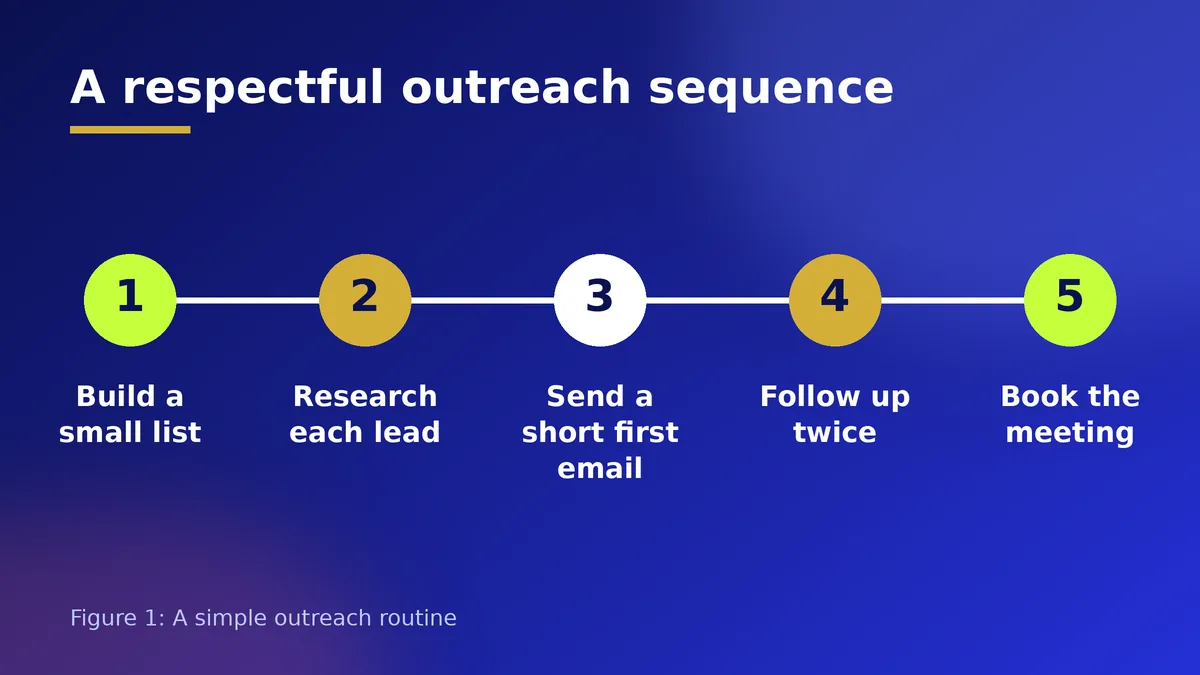
Build a Small, Accurate List
Start with fifty to a hundred well-researched contacts rather than thousands. Use company websites, professional networks and public directories. Note something specific about each person or company: a recent project, a new branch, a hiring post.
Check your local data-protection rules. In Nigeria, handle personal data responsibly, give people an easy way to opt out and never buy shady lists.
Write Emails People Answer
Keep the first email short: who you are, why you are writing to this person in particular, one clear benefit and one easy question. For example, ask whether they are the right person to speak to or if a short call next week would be useful.
Follow up twice, a few days apart, adding something new each time, such as a short idea or a result. Stop when someone says no, and thank them politely.
Set Up Your Email Safely
Send from a proper domain, not a free address, and set up SPF, DKIM and DMARC so mailbox providers can trust your messages. Warm up new mailboxes slowly and keep daily volume low. Include your real name, company and contact details, and an easy way to say no.
If many people mark your emails as spam, your messages will stop reaching inboxes. Quality always beats volume.
How to Charge
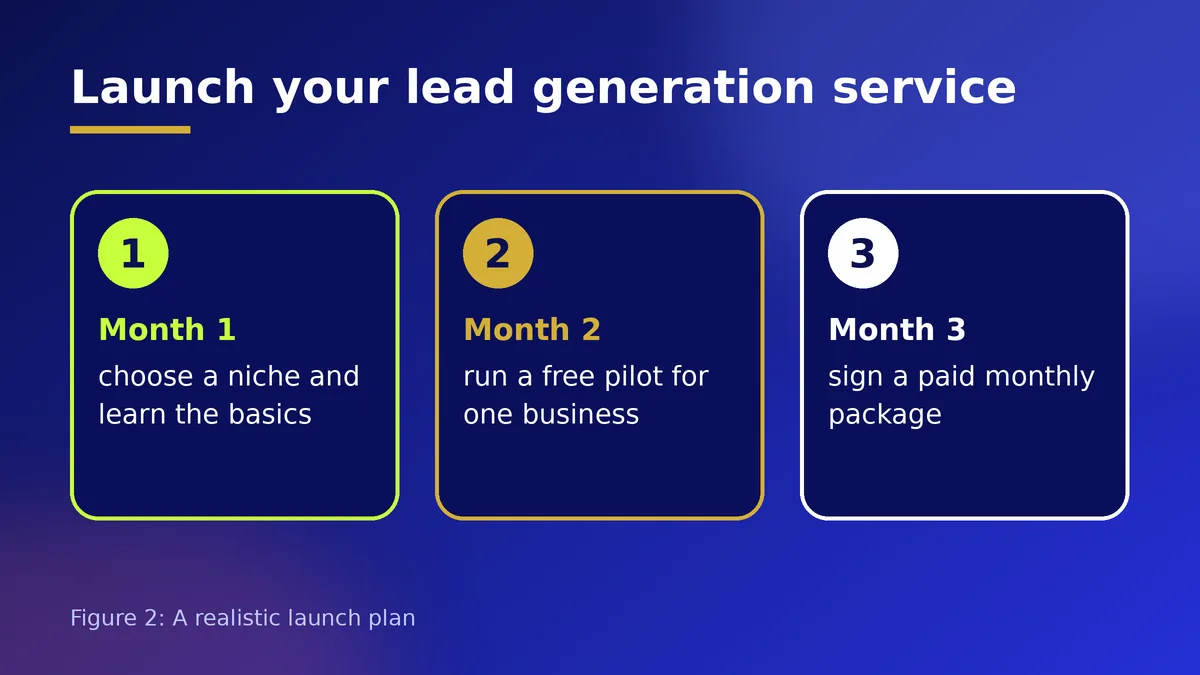
Start with a small pilot for one business to prove it works. Then offer a monthly package that covers list building, writing, sending and reporting, or charge per qualified meeting booked. Agree beforehand what counts as a qualified meeting, who owns the lead data and how reporting works.
Do not promise a fixed number of sales. You control the outreach, not the buyer's decision.
Action Checklist
- Pick one niche with a clear offer
- Build a list of fifty researched contacts
- Write a short email with one clear question
- Set up SPF, DKIM and DMARC on your domain
- Offer a small pilot to one business
- Define what counts as a qualified meeting
Frequently Asked Questions
Is cold email legal?
Rules differ by country and by type of contact. In general, be honest about who you are, have a legitimate reason to contact the person, protect their data and always give a simple way to opt out. Check the rules that apply to you and your client.
How many emails should I send a day?
Start with very small volumes from a properly set-up domain and increase slowly. Targeted messages to a few well-researched people usually work better than large blasts.
How do I prove results to a client?
Report contacts reached, replies, positive replies and meetings booked, and agree beforehand what counts as a qualified meeting. Keep the report simple and honest.