- A song can earn money in several different ways, each with its own rules.
- Register your songs and keep split sheets for every collaboration.
- Check which collecting bodies are currently recognised before you join.
The Short Answer
A single song can generate several streams of income, and many independent artists collect only one or two. Knowing the types of royalty, registering your work and agreeing who owns what from the start helps you get paid fully and fairly. Rules can change, so check current details with the Nigerian Copyright Commission.
Master and Publishing
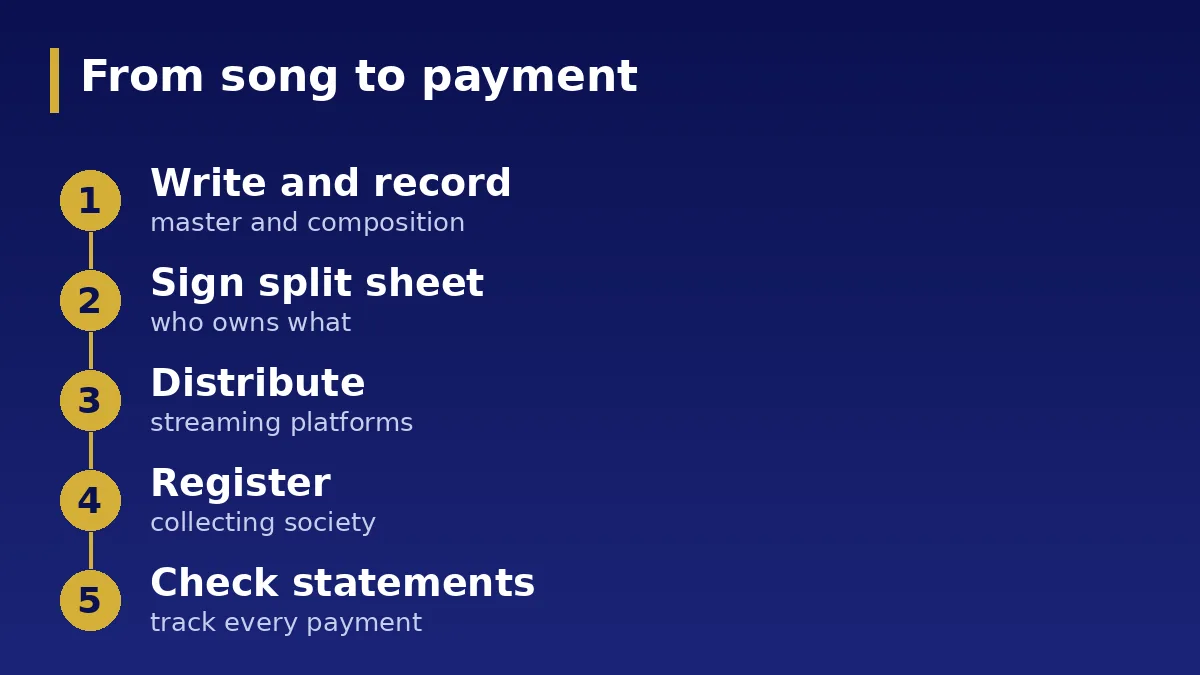
Two main rights exist in a song. The master is the sound recording. Publishing covers the composition, meaning the melody and lyrics. Different people can own each one, so paperwork matters.
If you write, record and release your own song, you may own both, but producers and co-writers can claim shares unless an agreement says otherwise.
Where the Money Comes From
Common sources are streaming income paid by platforms through your distributor, performance royalties when songs are played on radio, TV or in public venues, mechanical royalties for reproduction, sync fees for film, TV and adverts, and direct sales.
Each source reaches you through a different route, such as a distributor, a collecting society or a direct deal.
Collecting Societies
Collecting societies license music users and pay creators. Check which organisations are approved to operate in Nigeria, how to join, what they charge and how often they pay. Ask other artists about their experience.
Register your songs with the details of every writer and owner, so payments reach the right people.
Split Sheets and Contracts
Write down who owns what percentage of each song before it is released. Have every writer, producer and featured artist sign a split sheet. Keep a copy.
This simple page prevents many later disputes and makes registration much easier.
Track and Collect Your Income
Keep a record of each song, its ISRC, where it is distributed and what it earns. Check statements regularly and ask your distributor and society about any gaps.
Save part of each payment for tax, and ask an accountant how music income is treated.
A Simple Example
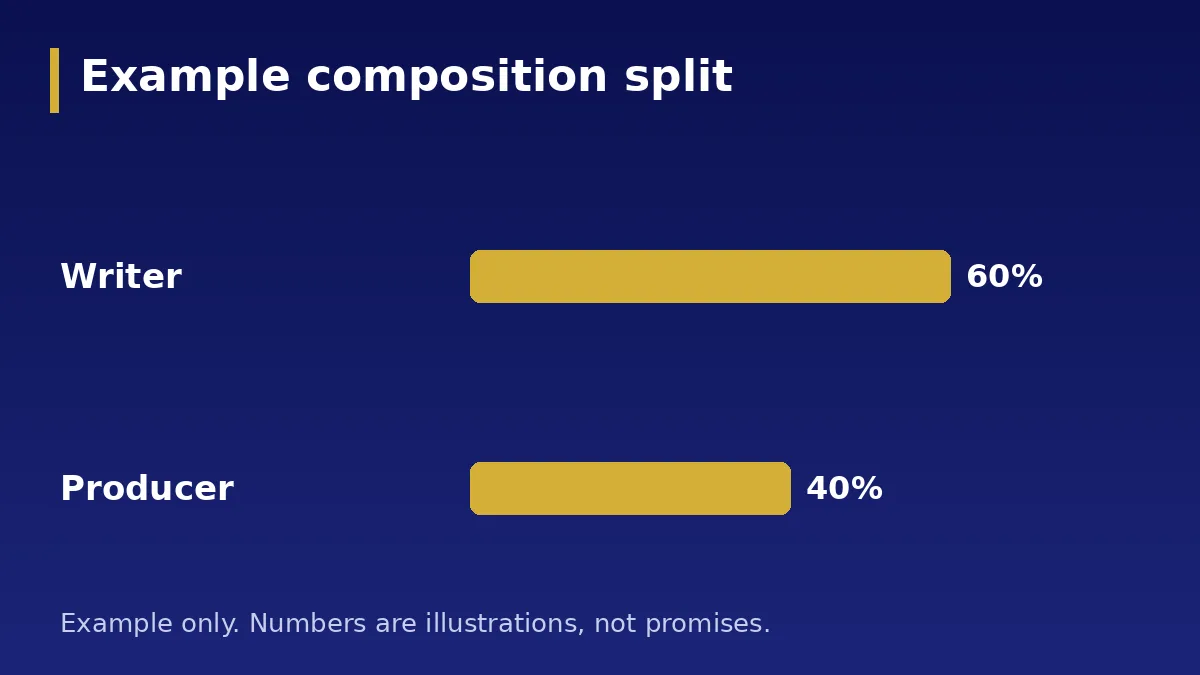
Imagine you write a song with a producer and agree a split of 60 percent to you and 40 percent to the producer for the composition. A streaming platform pays your distributor, who deducts a fee and pays you for the master. Separately, radio plays may generate performance income through a collecting society, which pays the registered owners.
If the split is not written down, the money can go to the wrong person or be held up.
Common Mistakes
Artists often release songs without signing split sheets, give distributors incorrect names, forget to register songs, or sign away rights in exchange for a small advance without understanding the terms.
Another mistake is ignoring statements. Check every payment against your records and ask about anything that looks wrong.
Questions to Ask a Distributor or Label
Ask who owns the master, how long the deal lasts, what share you receive, how often you are paid, which costs are deducted and what happens if you want to leave. Ask whether the deal covers publishing as well.
Get the answers in writing and have a lawyer review any long-term agreement.
Action Checklist
- Understand master and publishing rights
- Sign a split sheet for every song
- Distribute through a reputable distributor
- Check which collecting societies are recognised
- Register each song with full writer details
- Review statements and set aside money for tax