- Inflation reduces what each naira can buy over time.
- Money kept idle loses value, so compare returns with the inflation rate.
- Spread savings sensibly and keep short-term money safe and accessible.
The Short Answer
Inflation means prices rise over time, so the same money buys less. If your savings earn less than the rate of inflation, their real value falls. Understanding this helps you choose where to keep money and why to avoid holding large sums idle for years.
Why Prices Rise
Prices can rise because demand grows faster than supply, because the cost of fuel, transport and imported goods increases, or because the value of the currency falls. Official bodies publish inflation figures regularly, and you can look them up.
Your own inflation can differ from the headline number depending on what you spend most on, such as food, rent or fuel.
How It Hits Your Savings
If a savings account pays a low interest rate while prices rise faster, your money loses buying power each year. A million naira today may buy noticeably less in a few years.
This is why saving is still important but not enough on its own. Money you will need soon belongs in safe places, while long-term money may need options that can grow.
Ways to Protect Yourself
Compare interest rates from licensed banks and regulated products, and look at the real return after inflation. Consider spreading money across safe short-term options and carefully chosen longer-term investments suited to your goals.
Build skills and income too. Growing your earnings is one of the strongest defences against rising prices.
Spend and Plan Wisely
Review your budget more often when prices are changing. Buy essentials in sensible quantities when it saves money, but avoid panic buying or borrowing to stock up.
Be careful with offers that promise guaranteed high returns to beat inflation. Check any provider with the regulator before you invest.
A Simple Example
If prices rise by 20 percent in a year, something that cost 1,000 naira last year now costs 1,200. If your savings earned 8 percent, they grew from 1,000 to 1,080, so you can buy less than before despite earning interest.
This gap is why comparing returns with inflation matters. Numbers change, so check current figures.
Mistakes to Avoid
Do not keep all your money as cash at home. Do not chase promised guaranteed returns far above normal rates. Do not borrow to invest unless you fully understand the risk.
Avoid making big money decisions out of panic. Take time, compare options and ask a licensed adviser if needed.
Practical Steps This Month
Write down your monthly spending and note which categories rose most. Compare savings rates at two or three licensed providers. Look for ways to raise your income, such as a new skill or a small side service.
Review the plan every quarter as conditions change.
Action Checklist
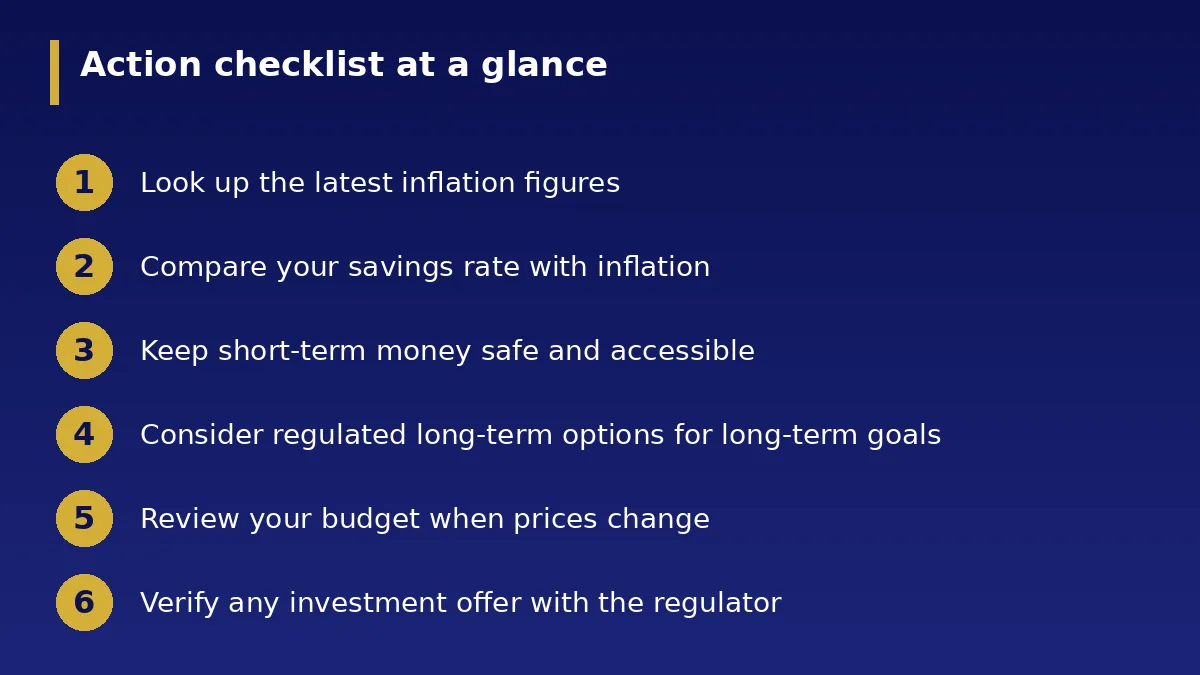
- Look up the latest inflation figures
- Compare your savings rate with inflation
- Keep short-term money safe and accessible
- Consider regulated long-term options for long-term goals
- Review your budget when prices change
- Verify any investment offer with the regulator