


- A manager runs the business side of an artist career: planning, deals, money and people.
- Start by serving one artist well, with a clear written agreement from day one.
- Your reputation for honesty and follow-through is your most valuable asset.
The Short Answer
An artiste manager is the person who guides an artist career and handles the business so the artist can focus on the music. Good managers plan, negotiate, organise and protect. You do not need a famous name to start, but you do need skill, discipline and trust.
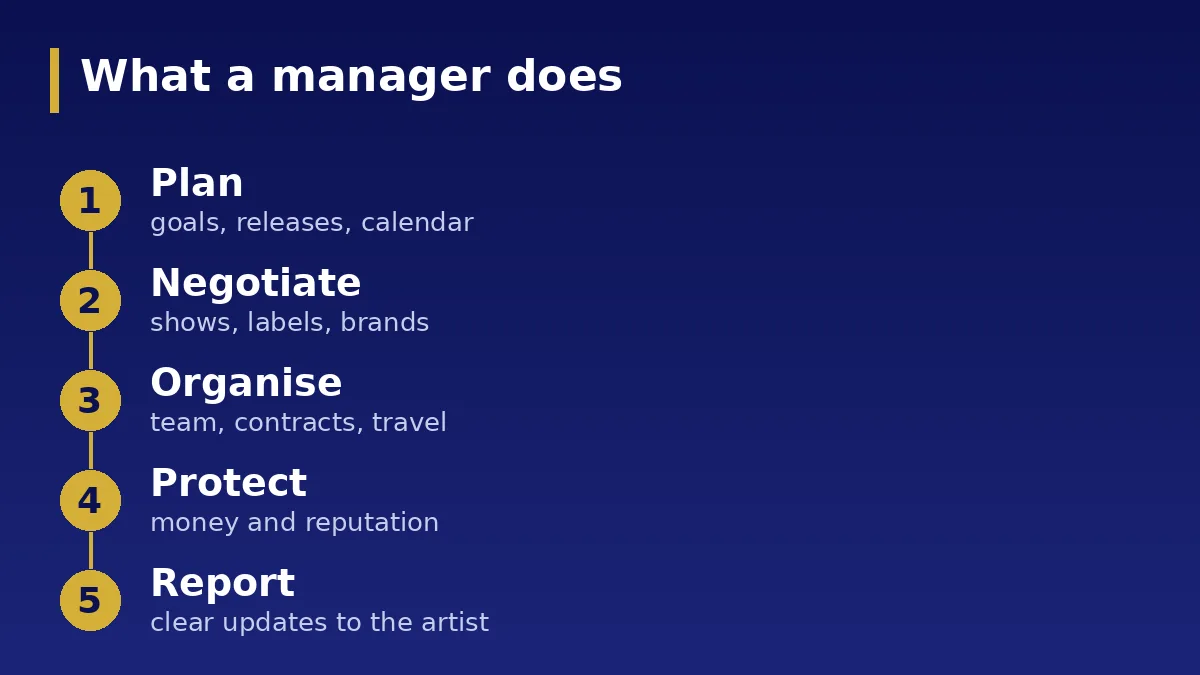
What a Manager Actually Does
A manager sets goals with the artist, builds a release and promotion plan, books shows, negotiates with labels, distributors, sponsors and promoters, and keeps the team working together. Day to day that means calendars, calls, contracts, budgets and solving problems before they grow.
The manager is the central point of contact, so organisation and clear communication matter as much as music taste.
Skills You Need to Build
Learn how the industry makes money: streaming, shows, publishing, brand deals and merchandise. Understand basic contracts, budgeting and marketing. Practise negotiating and writing clear emails and agreements.
Build a network of producers, engineers, DJs, media people, promoters and lawyers. Most opportunities arrive through trusted people, so be reliable and kind.
Finding and Choosing an Artist
Look for an artist with talent, a work ethic and a team mindset. Check that they take feedback, deliver on time and want a long-term career, not only quick fame. Watch them perform and listen to their back catalogue.
Be honest about whether you can add value. A manager who cannot help the artist grow will hold them back.
Agreements and Getting Paid
Managers commonly earn a percentage of the artist income, agreed in writing. The exact rate, which income it applies to, the length of the deal and how expenses are handled should be clear. Have a lawyer review the contract for both sides.
Keep the money transparent. Open separate accounts where possible, record every payment and share statements regularly.
Build Trust and Grow
Start small: organise a release, book a few shows and report results. Keep promises, admit mistakes quickly and give credit to the team. Learn from experienced managers and ask for advice.
Review the plan every quarter with the artist and adjust. Long careers are built on steady progress and good relationships.
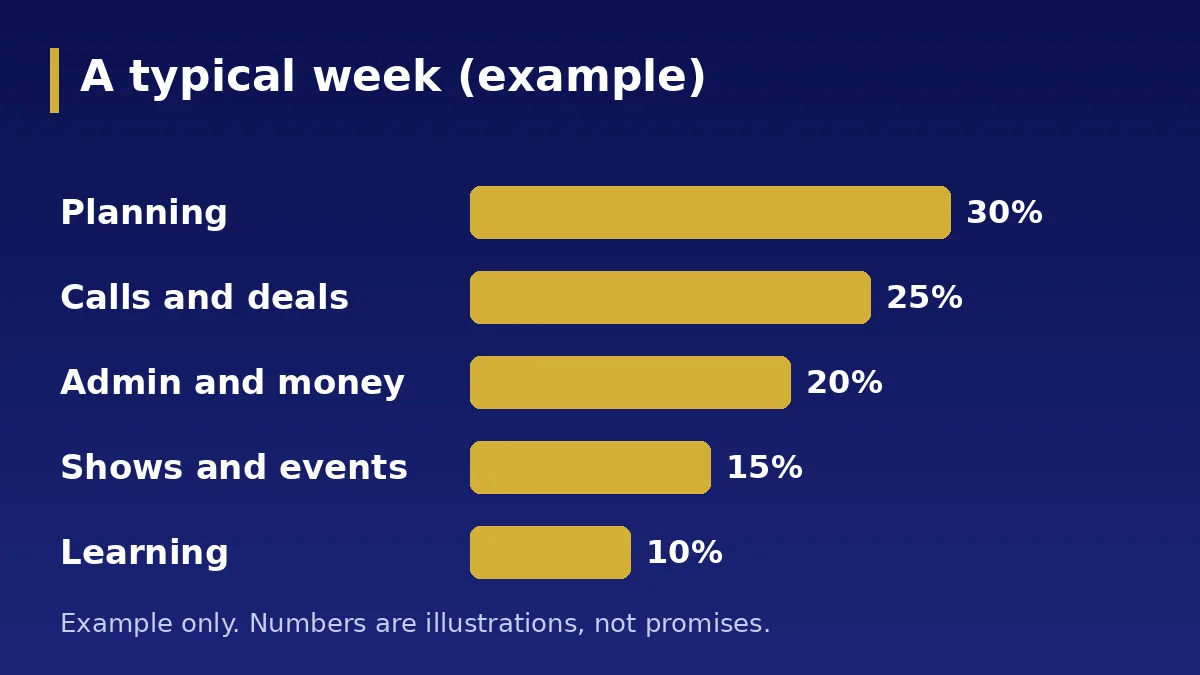
A Typical Week in the Job
Monday might be planning content and checking the release schedule. Midweek could include calls with a promoter, a producer and a media contact, followed by agreeing a show fee. At the weekend you may be at a performance, handling sound, timing and payment.
Between those tasks you answer messages, update the budget and prepare for next week. Managers who build simple routines and checklists cope far better than those who react to every message.
Mistakes New Managers Make
Common mistakes include promising results you cannot deliver, spending the artist money without approval, working without a written agreement and taking on too many artists at once. Another is ignoring the artist wellbeing, since burnout ends careers.
Be honest about what you know and learn from people who have done it before.
Building Your Reputation
Be on time, do what you say and keep information private. Share credit and give clear reports on money and progress. Over time, promoters, labels and artists will recommend you because they trust you.
Keep a record of your results, such as releases organised, shows booked and audience growth, so you can show your track record to future artists.
Action Checklist
- Learn how artists earn money in the industry
- Build relationships with producers, DJs, promoters and lawyers
- Choose an artist with talent, discipline and a team mindset
- Agree the management deal in a written contract
- Keep clear records of money in and out
- Review the plan with your artist every quarter