
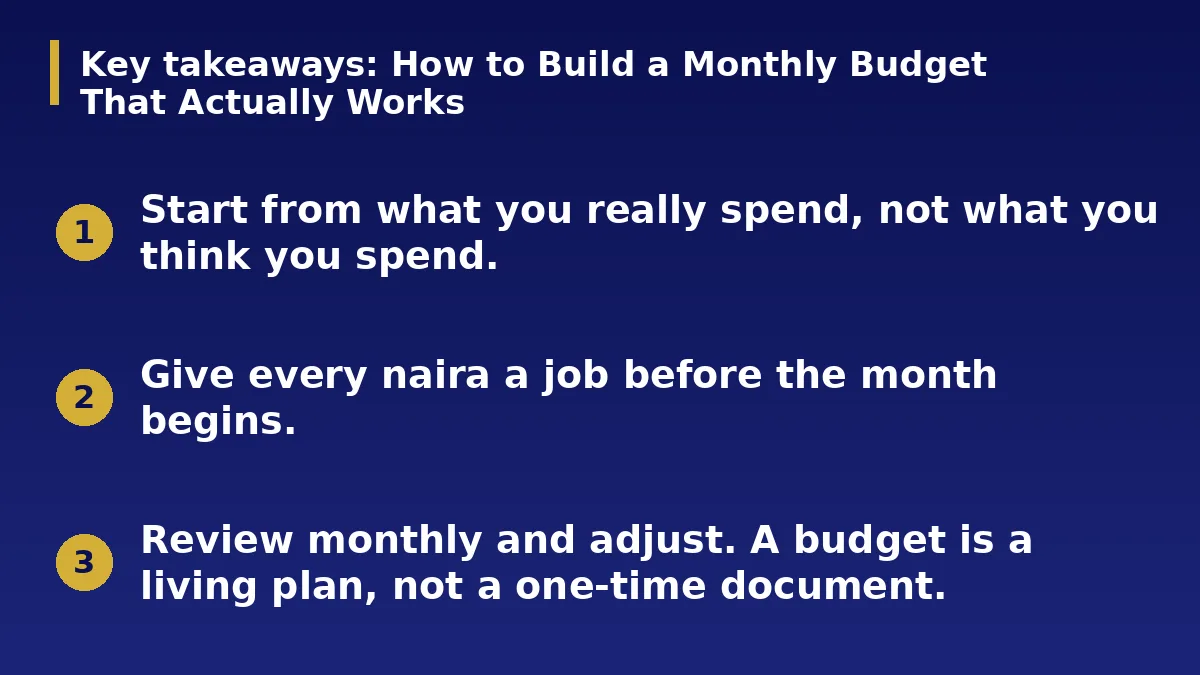
- Start from what you really spend, not what you think you spend.
- Give every naira a job before the month begins.
- Review monthly and adjust. A budget is a living plan, not a one-time document.
The Short Answer
A budget is a plan for your money before the month starts. It works when it is simple, based on real numbers and easy to adjust. You do not need special software. A notebook, a spreadsheet or your phone notes app is enough.
The goal is not to restrict you. It is to make sure money goes to what matters most to you, with fewer surprises at the end of the month.
Find Your Real Numbers
Collect three months of bank and mobile money statements. Add up your income, then group your spending into categories such as rent, food, transport, data, school fees, bills, family support and fun. Most people find a few categories much larger than expected.
Use averages for costs that change, such as transport and food. For yearly costs, divide by twelve so they do not ambush you.
Split Your Income
A common starting point is fifty percent for needs, thirty for wants and twenty for savings and debt payments. Treat it as a guide and change it to fit your life. If rent takes sixty percent, trim wants first rather than abandoning savings.
Pay savings and fixed bills first, on payday. What remains is your spending money for the month, and you can spend it without guilt.
Handle Irregular Income
If your income varies, base your budget on your lowest typical month. When you earn more, send the extra to savings, debt or a buffer for lean months. Keep a small cash buffer equal to one month of expenses.
Track weekly instead of monthly so you can react early when a month is going badly.
Keep It Going
Check your budget every week for five minutes and review the whole plan each month. Note where you overspent and why. Change the numbers instead of quitting.
Set one clear goal for the next three months, such as a first month of emergency savings or clearing one debt. A visible goal keeps the habit alive.
A Worked Example
Imagine a monthly income of 300,000 naira. Rent and utilities take 90,000, food 60,000, transport and data 40,000 and family support 20,000, so needs total 210,000. Set aside 45,000 for savings and debt, which leaves 45,000 for wants.
If the wants line runs out on the 20th, you have two choices: spend less on one category or move a small amount from another. Either way, you decide on purpose instead of discovering a gap at month end.
Common Budget Mistakes
The first mistake is making the budget too strict. A plan with no room for fun fails by week three. Add a small amount for treats and unexpected costs, so one surprise does not ruin everything.
Another mistake is forgetting irregular costs such as school fees, festive travel, insurance renewals and repairs. List them for the year and set aside a monthly share. Finally, do not abandon the budget after a bad month. Reset and carry on.
Tools That Make It Easier
A notebook works. So does a spreadsheet with a column for planned amounts and one for actual amounts. Many banking apps now categorise spending automatically and send alerts when you pass a limit.
Choose the simplest tool you will actually use. Consistency matters more than the app, and checking in for five minutes every week beats a perfect system you open twice a year.
Action Checklist
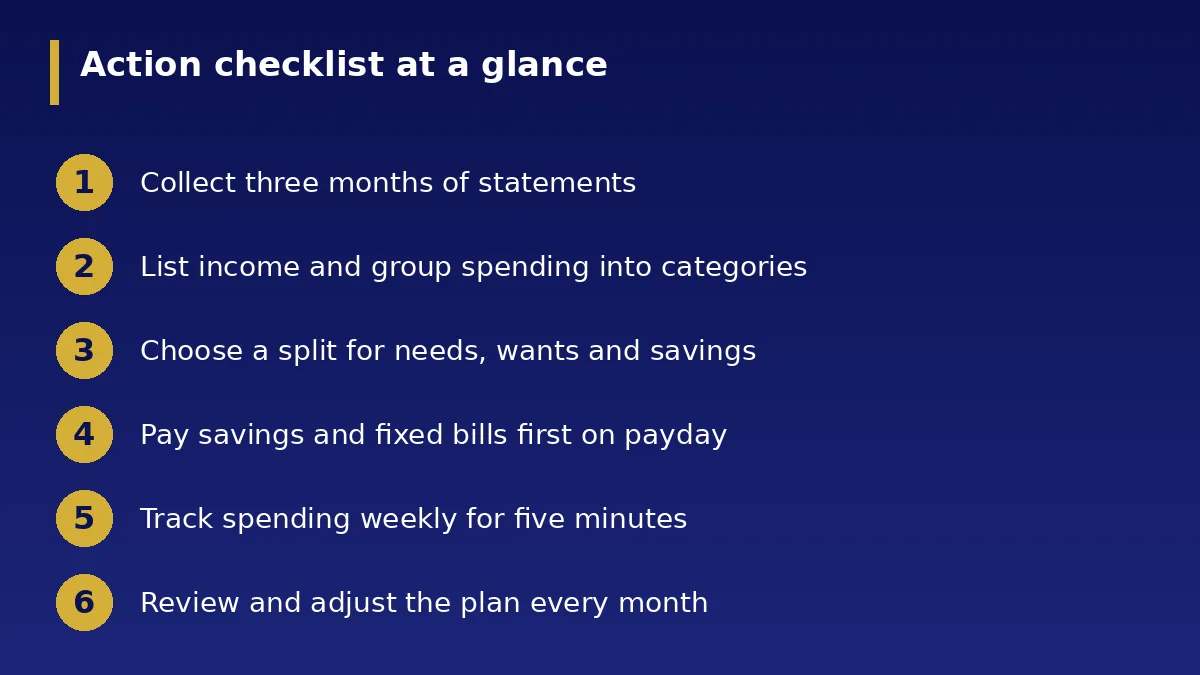
- Collect three months of statements
- List income and group spending into categories
- Choose a split for needs, wants and savings
- Pay savings and fixed bills first on payday
- Track spending weekly for five minutes
- Review and adjust the plan every month