

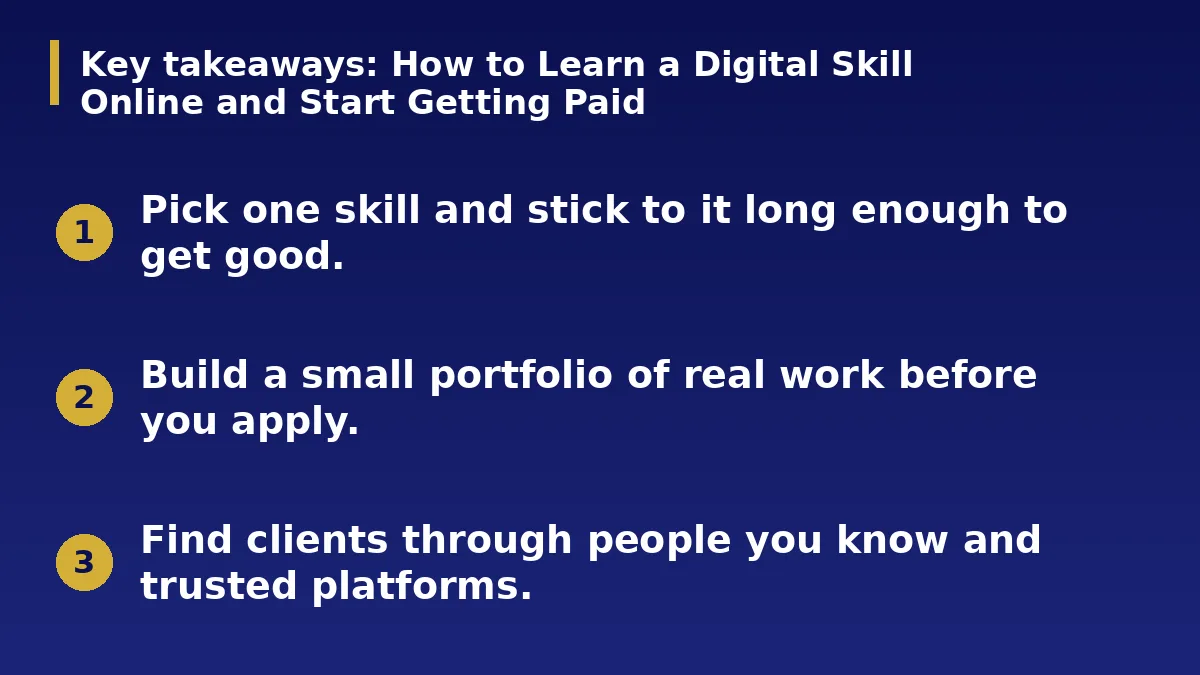
- Pick one skill and stick to it long enough to get good.
- Build a small portfolio of real work before you apply.
- Find clients through people you know and trusted platforms.
The Short Answer
You can learn a marketable digital skill with a phone or laptop, patience and a plan. The path is simple: choose a skill, learn the basics, practise on real projects and show your results. Income comes after proof of work.
Choose a Skill
Look at skills with steady demand, such as graphic design, video editing, writing, social media management, bookkeeping, web development and data entry. Consider what you enjoy and what you can practise daily.
Pick one skill for the next three months instead of sampling many.
Learn Step by Step
Use free and low-cost courses, tutorials and community groups. Follow a clear curriculum, take notes and practise every day, even for an hour. Join a learner group for support and feedback.
Be careful with courses that promise guaranteed income.
Build Proof of Work
Create three to five samples that look like real client work. Offer to help a small business or organisation for free once or twice in return for a testimonial. Put your work in a simple online portfolio.
Keep improving each piece based on feedback.
Find Your First Clients
Tell people what you do and share your work. Use trusted platforms and local business groups. Send short, specific messages that explain how you can help.
Never pay to get a job and be cautious with offers that seem too easy.
Grow Over Time
Raise prices as you gain results, keep learning and ask clients for referrals. Track your income and set aside money for tax and equipment.
Consistency over a year beats a burst of effort for a month.
A 90-Day Plan
In the first month, learn the basics through a structured course and practise daily. In the second month, make three to five practice projects and ask for feedback. In the third month, build a simple portfolio and start approaching people who might pay for your work.
Adjust the plan to fit your schedule, but keep the daily habit.
Mistakes to Avoid
Do not jump between skills every week. Do not spend months watching tutorials without making anything. Do not pay anyone who promises a guaranteed job or high income for a fee.
Do not wait to feel perfect before sharing your work. Improvement comes from real feedback.
Tools You Need
A reliable phone or laptop, a steady power and data plan, a notes app and free software for your skill are enough to start. Use a simple portfolio page and a professional email address.
Back up your work regularly so a lost device does not erase your progress.
Action Checklist
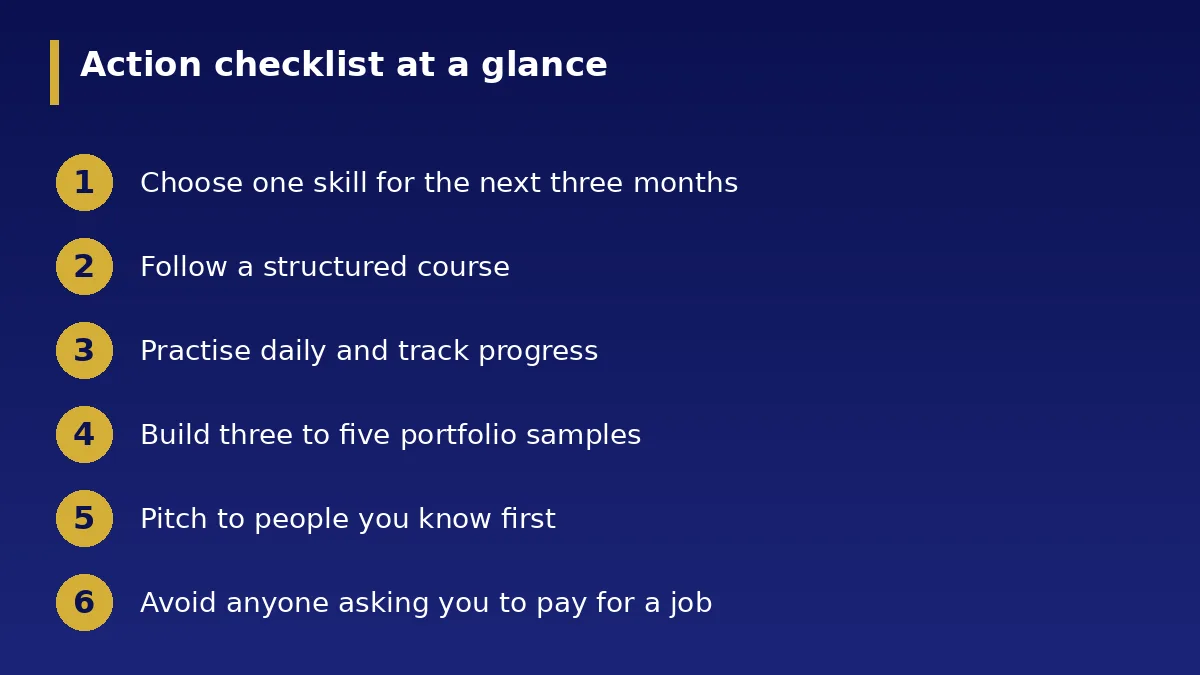
- Choose one skill for the next three months
- Follow a structured course
- Practise daily and track progress
- Build three to five portfolio samples
- Pitch to people you know first
- Avoid anyone asking you to pay for a job