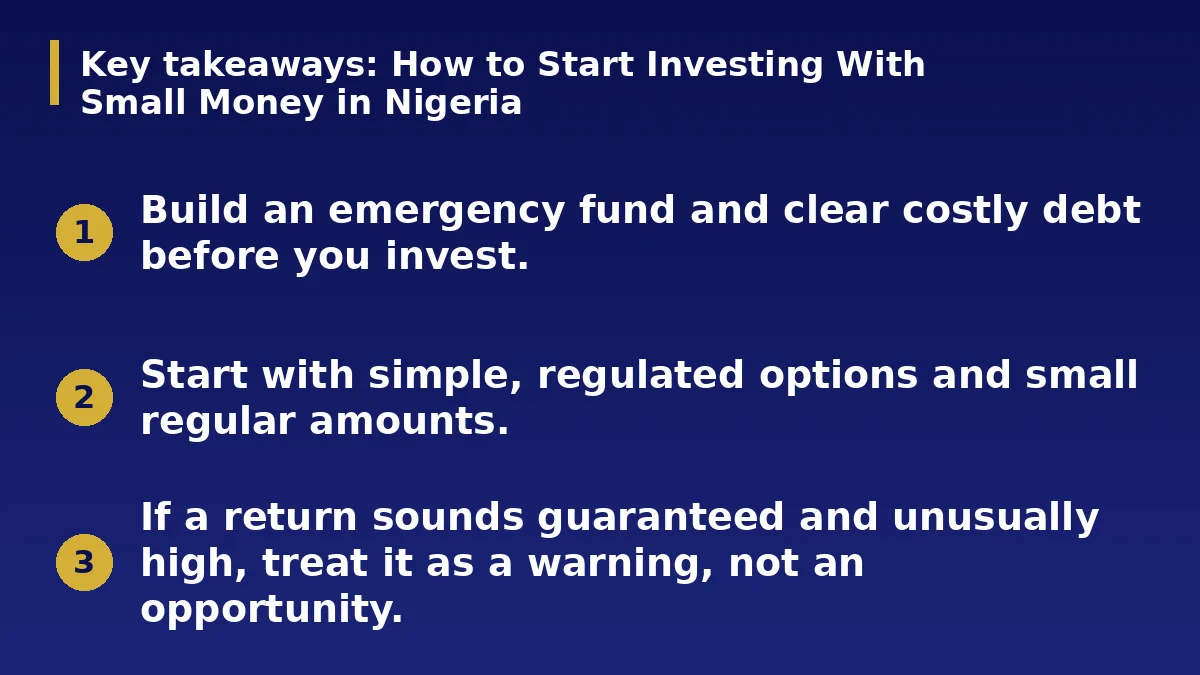
- Build an emergency fund and clear costly debt before you invest.
- Start with simple, regulated options and small regular amounts.
- If a return sounds guaranteed and unusually high, treat it as a warning, not an opportunity.
The Short Answer
You do not need a large sum to begin investing. What you need is order. First, a small emergency fund. Second, no expensive debt hanging over you. Third, money you will not need for at least a few years. Once those are in place, small regular amounts invested in simple, regulated products are a sensible start.
This is general education and not financial advice. Returns are never guaranteed and you can lose money, so consider speaking to a licensed adviser about your situation.
Get the Foundations Right
Investing money you may need next month is risky, because a market dip can force you to sell at a loss. That is why an emergency fund comes first. Paying off high-interest debt also usually beats most investment returns, since the debt is a guaranteed cost.
Decide your goal and time frame. Money for school fees in one year belongs in safe, accessible places. Money for retirement in twenty years can accept more ups and downs.
The Main Options
Common choices for beginners include money market funds and treasury bills for lower-risk, shorter-term needs, and mutual funds, exchange traded funds or shares for longer-term growth. Property and business investments also exist but usually need more money and more time.
Use platforms and fund managers that are registered with the Securities and Exchange Commission, and check that the product itself is also registered. Read the fees, the minimum amount and the withdrawal terms before you start.
Understand Risk and Spread It
Higher potential returns come with higher risk. Never put everything in one asset, one company or one person you trust. Spreading money across a few different types of investment means one poor result does not wipe you out.
Invest a fixed amount regularly instead of waiting for the perfect moment. Over time this smooths out the price swings and builds the habit.
Avoid Schemes and Scams
Be wary of anyone promising fixed, very high returns, asking you to recruit others or pushing you to decide today. Check the company name against the regulator register and search for complaints.
If you cannot explain in one sentence how the money makes a profit, do not invest in it. A boring, regulated product you understand beats an exciting one you do not.
A Simple Starter Plan
Here is one way to begin. Keep three to six months of expenses in a safe savings place. Then choose a small monthly amount you will not miss, perhaps ten percent of your income, and put it into a regulated money market fund or similar low-risk product while you learn.
After a few months, if your goals are long term, add a small amount into a diversified fund. Increase the amount when your income grows. The aim is steady progress, not a single big bet.
Costs and Taxes to Watch
Fees reduce your returns, so compare them. Look at management fees, transaction charges and any penalty for early withdrawal. A product that looks good before fees may look average after them.
Tax rules apply to some kinds of investment income and gains, and they can change. Check the current rules or speak to a tax professional so you are not surprised. Keep records of what you invested, when and through whom.
Track Your Progress
Review your investments a few times a year, not every day. Daily price movements can tempt you to make hasty decisions. Check that your spread still matches your goals and that you are still comfortable with the risk.
Write down why you invested in each product. If the reason is still valid, stay the course. If the facts have changed, adjust. Calm, documented decisions beat emotional ones.
Action Checklist
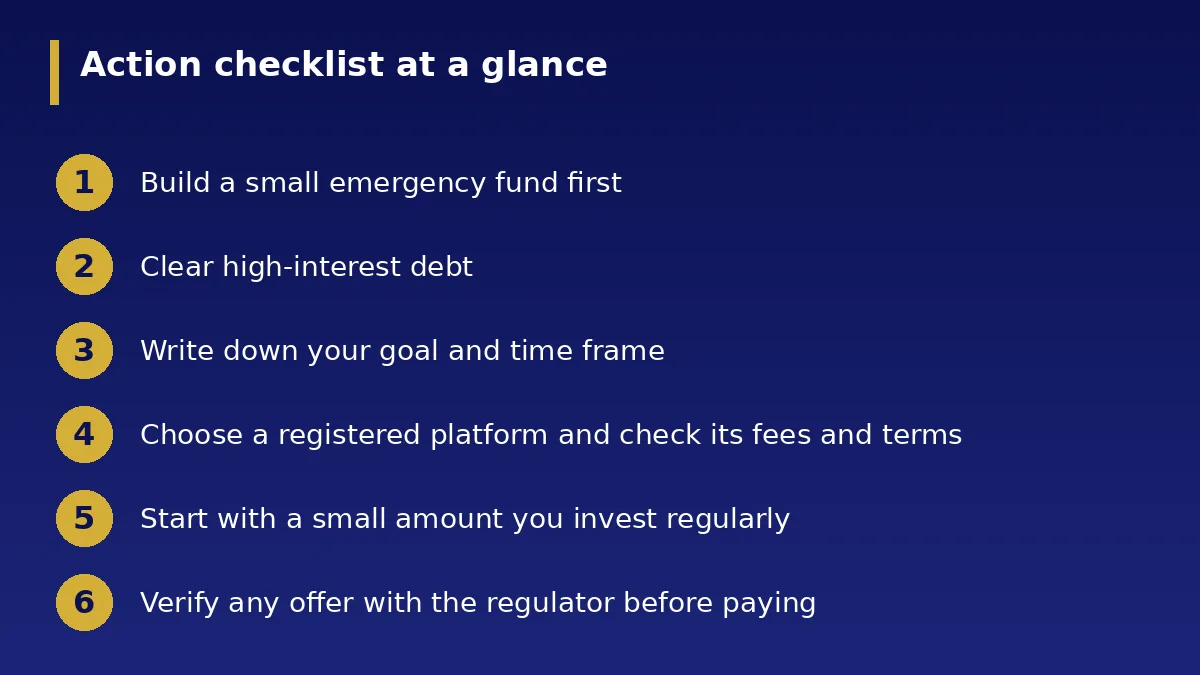
- Build a small emergency fund first
- Clear high-interest debt
- Write down your goal and time frame
- Choose a registered platform and check its fees and terms
- Start with a small amount you invest regularly
- Verify any offer with the regulator before paying