- Copywriting is paid well because it is tied to sales: good words bring in money.
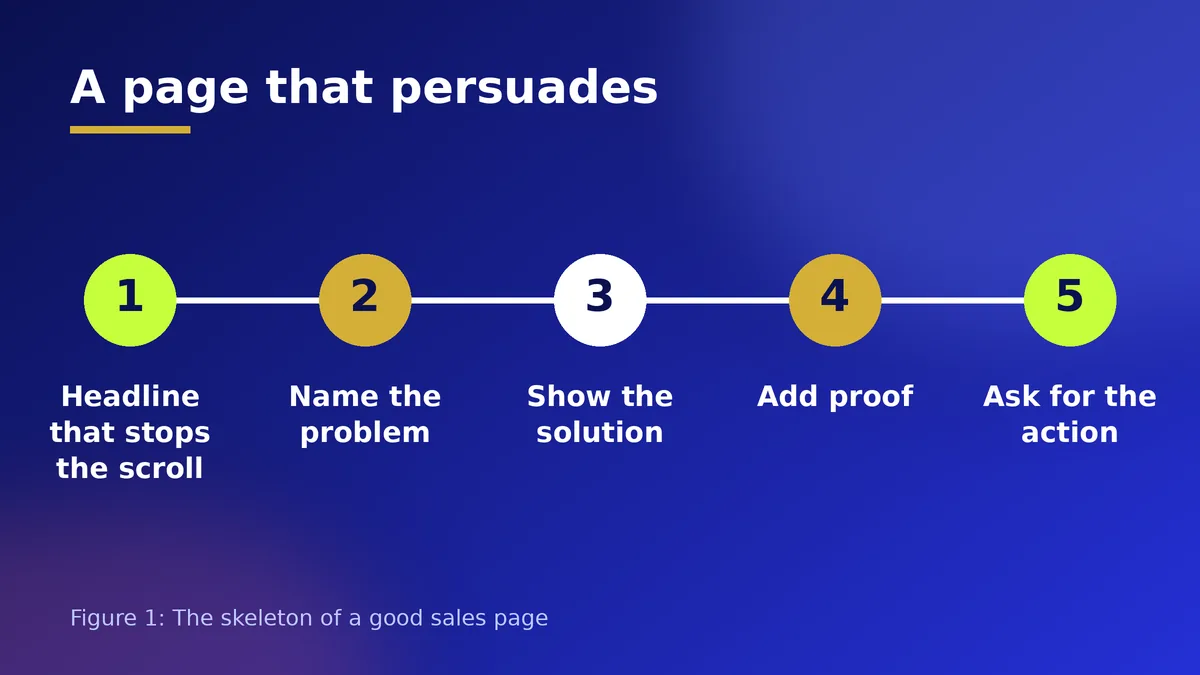
- Learn a simple structure: attention, problem, solution, proof and a clear call to action.
- Practise on real products, build three samples, then offer to improve one page or email sequence for a business.
The Short Answer
Every business that sells something needs words that make people act: a headline, a product page, a sales email, an advert, a script. Direct-response copywriting is the craft of writing those words so the reader takes one clear action, such as buy, book, call or sign up. Because the result can be measured in sales, good copywriters can charge much more than ordinary writers.
It is a learnable skill. It does not need a degree, but it does need practice, honesty and a lot of reading and rewriting.
How Persuasion Really Works
Good copy starts with the customer, not the product. Find out who the buyer is, what they want, what worries them and what they have already tried. Then show them that you understand the problem, explain how your product solves it, prove it with evidence, and tell them exactly what to do next.
Be specific. "Lose weight fast" is weak. "A twelve-week walking plan that fits into a thirty-minute lunch break" is clear. Specific promises, real numbers and real stories are more believable than big adjectives.
What to Study and Practise
Read ads, sales pages and emails that you actually respond to and ask why they work. Copy a good page by hand to feel its rhythm, then write your own version for a different product. Rewrite weak pages from local businesses and compare your version with theirs.
Learn the basics of headlines, hooks, benefits versus features, objections, guarantees and calls to action. Learn to edit hard: cut every word that does not help the reader decide.
Build a Portfolio Without Clients
Create three samples: a sales page, a short email sequence and a set of advert variations. Choose real products, ideally from your chosen niche, such as fashion, health, schools, real estate or music. Explain the customer, the goal and your approach in a few lines under each sample.
If you can, test your work. Run a small advert or send an email to a friendly list and note what happened. Even small results give you something real to talk about.
Getting Paid
Pitch businesses whose pages are weak but whose products are good. Send a short message with one specific improvement and offer to rewrite the page or an email sequence. Charge per project or per word at first, then move to retainers or a base fee plus a performance bonus once you have proof.
Always agree the brief, the number of revisions and the payment terms in writing, and ask for a deposit before you start.
Ethics and Mistakes
Never invent testimonials, fake scarcity or promise results the product cannot deliver. Misleading claims damage the client's brand and can break advertising rules. Be honest, test your claims and keep records of any evidence you quote.
Action Checklist
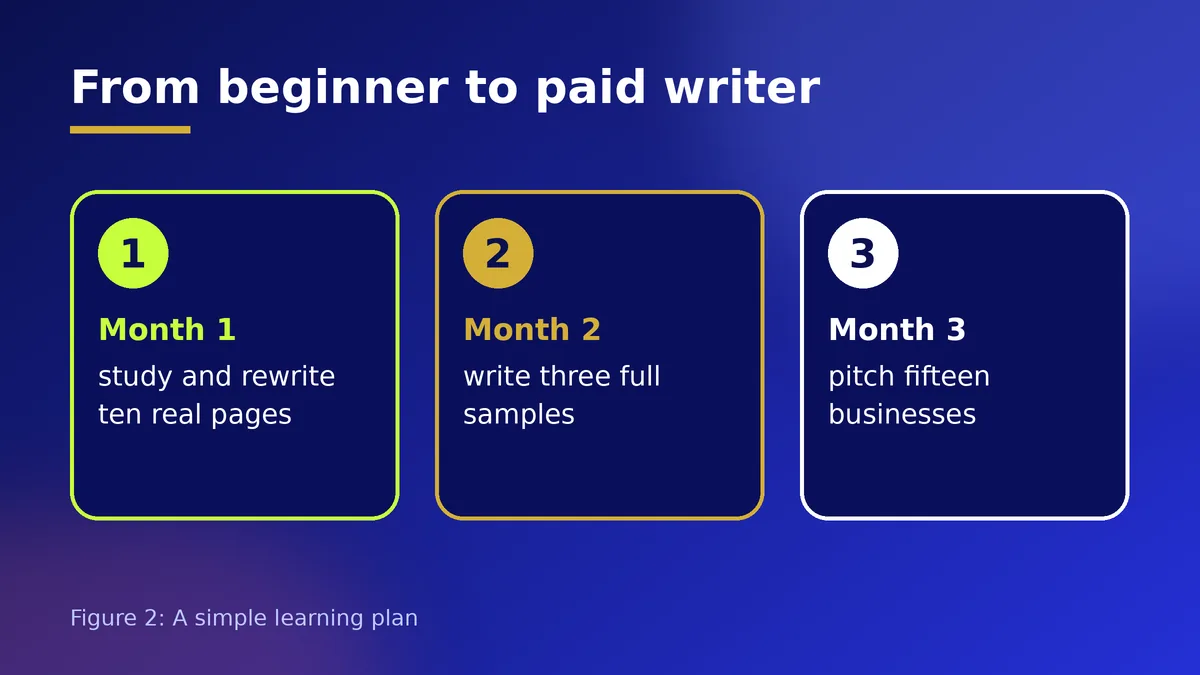
- Rewrite ten real sales pages for practice
- Write three portfolio samples in one niche
- Learn headlines, benefits, objections and calls to action
- Pitch fifteen businesses with one specific improvement
- Agree scope, revisions and deposit in writing
- Never fake proof or results
Frequently Asked Questions
Do I need a degree to be a copywriter?
No. Clients look at your samples and results, not your certificates. A strong portfolio, clear thinking and honest writing matter most.
How do I get samples if I have no clients?
Write spec pieces for real products: a sales page, an email sequence and advert variations. Explain the audience and goal for each. If you can, test them and record what happened.
What if a product claim seems exaggerated?
Do not write it. Ask the client for evidence or change the claim. Misleading adverts harm the brand and can break advertising rules.