- Choose a payment route that your client can use and that you understand before you quote a price.
- Always send a clear invoice, agree terms in writing and keep records of every payment.
- Be suspicious of overpayment, upfront fees and urgent requests: these are classic scam signs.
The Short Answer
Many Nigerians earn from clients abroad as virtual assistants, designers, writers, editors and developers. The skill is not only doing the work but getting paid safely and keeping good records. A careless payment setup can lead to delays, high fees or even lost money.
Rules, fees and supported services change often, so always confirm current details with the provider, your bank and a qualified accountant before you rely on any route.
Know Your Payment Options
Common routes include international payment services that give you a receiving account, a domiciliary account at a Nigerian bank, local transfers from clients' platforms and freelance marketplaces that pay out to your bank. Each has different fees, limits, delivery times and exchange rates.
Compare the total cost, which includes fees on both ends and the exchange rate, and check how long money takes to arrive and how easy it is to withdraw. Pick the option your client already supports, so you do not lose work over payment problems.
Invoice Like a Professional
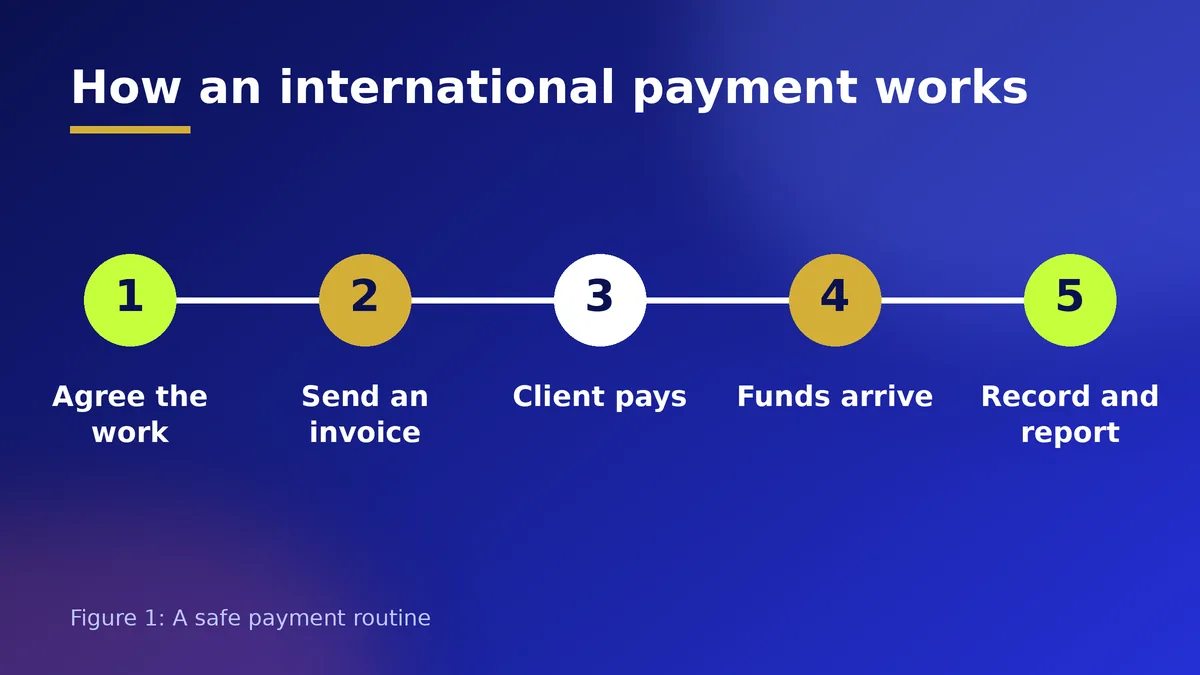
A clear invoice makes clients pay faster. Include your name or business name, the client's details, an invoice number, the date, a description of the work, the amount and currency, payment terms and your payment details. Number every invoice and keep a copy.
For new clients, ask for a deposit before you start and the balance before final files are released. Agree the scope, deadlines and revisions in writing.
Avoid Scams
Be careful if a client overpays and asks you to send back the difference, asks you to pay a fee to receive work, pushes you to move to unknown payment links or pressures you to act fast. Verify the person and the company before you share bank details or do work, and never share passwords or one-time codes.
If an offer sounds too good to be true, pause and ask for advice. Real clients are patient with reasonable security questions.
Keep Records and Pay Your Taxes
Keep a simple spreadsheet of invoices, payment dates, amounts, fees and exchange rates, and save statements and contracts. Good records protect you in a dispute and make tax time much easier.
Tax rules for income from abroad can change, and registration requirements may apply to you. Speak to a qualified accountant or the relevant tax authority so you understand what you must register and file.
Protect Your Money
Use strong, unique passwords and two-step verification on every payment account. Do not leave large amounts sitting where you do not need them. Keep your business and personal spending clearly separated, so your records stay clean.
Action Checklist
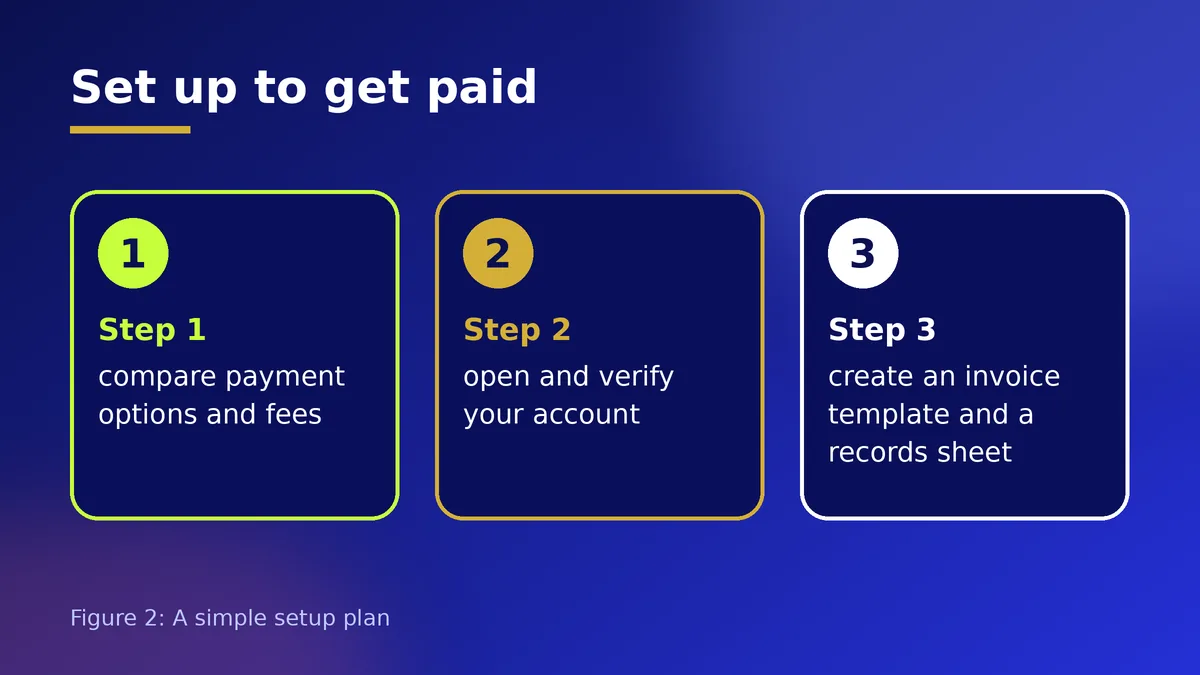
- Compare at least two payment options and their total costs
- Verify your account with your own accurate details
- Create an invoice template with a numbering system
- Ask new clients for a deposit
- Turn on two-step verification everywhere
- Keep a records sheet and speak to an accountant about tax
Frequently Asked Questions
Which payment method is best for me?
There is no single best choice. Compare total fees, exchange rates, limits and speed, and pick one your client already supports. Confirm current rules with the provider and your bank.
What are the biggest scam warning signs?
Overpayments with requests for a refund, requests to pay a fee to receive work, pressure to hurry and links to unfamiliar payment pages. Verify the client first.
Do I need to pay tax on foreign income?
Tax rules change, and your situation may be different from someone else's. Speak to a qualified accountant or the relevant tax authority about registration and filing.