
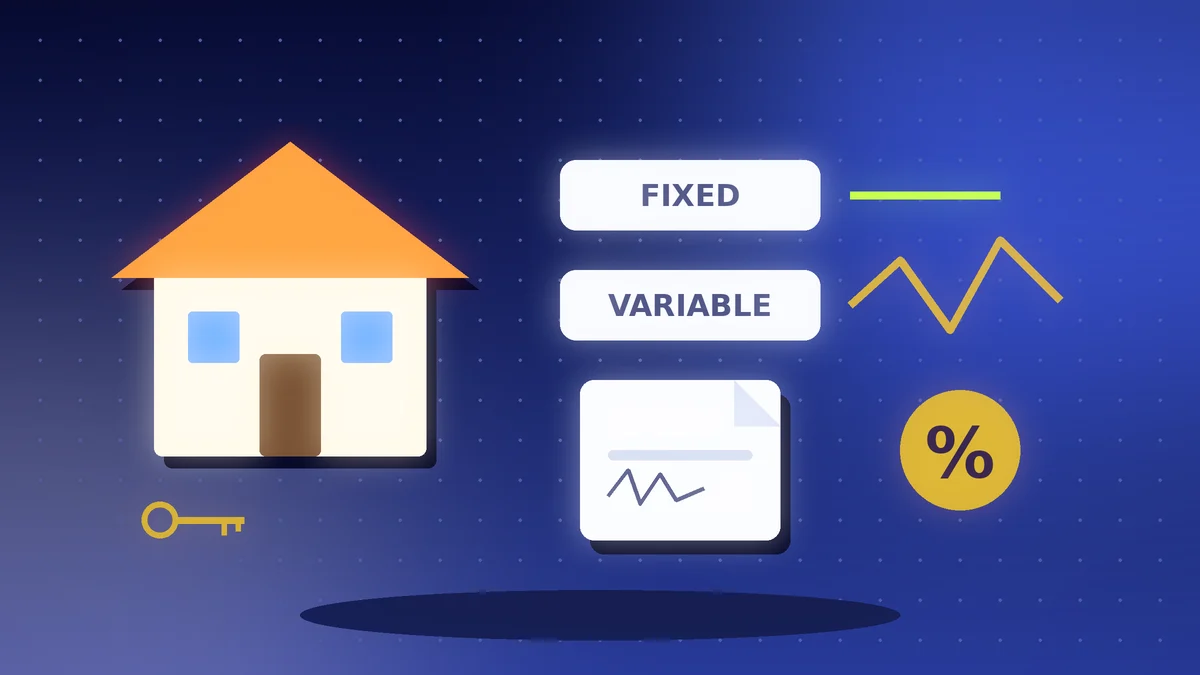
- A fixed rate stays the same for a set period, while a variable rate can change.
- Fixed rates give certainty, and variable rates can be cheaper or costlier over time.
- Test whether you could still pay if the rate rose, and read all fees.
The Short Answer
A mortgage is a loan used to buy property, with the property as security. With a fixed rate your interest rate stays the same for a set period, so your payment is predictable. With a variable rate the rate can go up or down, so your payment can change. Neither is always cheaper. Choose the one that fits your budget and your comfort with risk. Terms differ by country and lender, so confirm current details. This is general information, not financial advice.
Fixed vs Variable
| Feature | Fixed rate | Variable rate |
|---|---|---|
| Payment | Stays the same for the fixed period | May rise or fall |
| Certainty | High, which helps budgeting | Lower |
| Starting cost | Sometimes higher | Sometimes lower |
| If rates fall | You may not benefit until the period ends | You may benefit |
| If rates rise | You are protected during the period | Your payment may rise |
| Early exit | May carry a penalty | Often more flexible, but check terms |
Stress-Test Your Budget
Ask yourself what would happen if your payment rose by a meaningful amount, or if your income dropped for a few months. Keep an emergency fund, as in our guide on how many months to save. If a small rise would put you under stress, a fixed rate may suit you better.
Look at the Whole Cost
Compare the total repayment over the term, the arrangement and valuation fees, early repayment charges, insurance and the deposit needed. A lower rate with high fees can cost more. Ask each lender for a written breakdown.
Prepare Before You Apply
Lenders look at your income, savings, other debts and credit history. Improve your profile with our guide on credit scores, and gather proof of income and identification. Verify the property's documents before you commit, using our title guide.
Questions to Ask a Lender
Is the rate fixed or variable, and for how long? What happens at the end of the fixed period? Can I pay extra or repay early without penalty? Which fees apply? What insurance is required? What happens if I miss a payment? See also our guide on home financing options.
Review Over Time
Check your mortgage each year and before any fixed period ends. If a better deal exists, work out whether switching still saves money after any fees.
Action Checklist
- Decide how much risk and payment change you can handle
- Stress-test your budget against a rate rise
- Compare the total cost, not just the rate
- Ask about fees, penalties and what happens after the fixed period
- Improve your credit profile before applying
- Verify the property's title and documents
- Review your mortgage every year