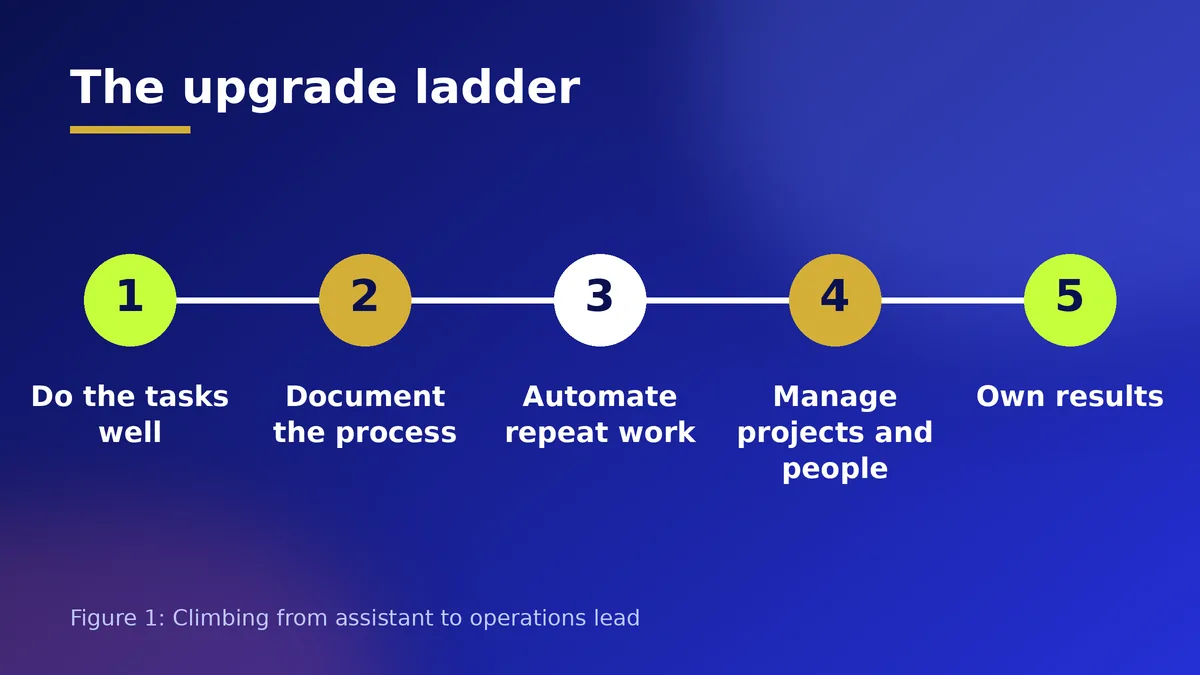
- Basic tasks are easy to replace. Systems, ownership and results are harder to replace and better paid.
- Learn project management, process documentation, simple automation and clear reporting.
- Show what you improved with numbers and examples, then move from hourly work to a monthly role.
The Short Answer
Many virtual assistants do excellent work but stay at the same pay for years because they are paid for tasks: answering emails, scheduling, data entry. The people who earn more are paid for outcomes, such as a calendar that runs smoothly, a team that never misses a deadline or a business that no longer needs its owner in every detail.
That role is often called operations manager, executive assistant, project coordinator or chief of staff. You can grow into it step by step from where you are now.
Learn to Think in Systems
Start by noticing what repeats. Every task you do more than twice can usually become a written process, a checklist or a template. Write down the steps in simple language and keep them in a shared document. This makes you easier to cover for, easier to train others and more valuable because the business depends on a system, not only on memory.
Then look for what breaks: late approvals, missing information, unclear ownership. Suggest a small fix and measure the result.
Skills Worth Adding
Project management: planning work, setting deadlines, tracking progress in a tool such as Trello, Asana, ClickUp or a simple spreadsheet, and keeping everyone updated. Communication: short, clear status reports and meeting notes. Light automation: connecting forms, calendars and spreadsheets so routine work runs itself. Basic finance: invoices, budgets, expenses and simple reports.
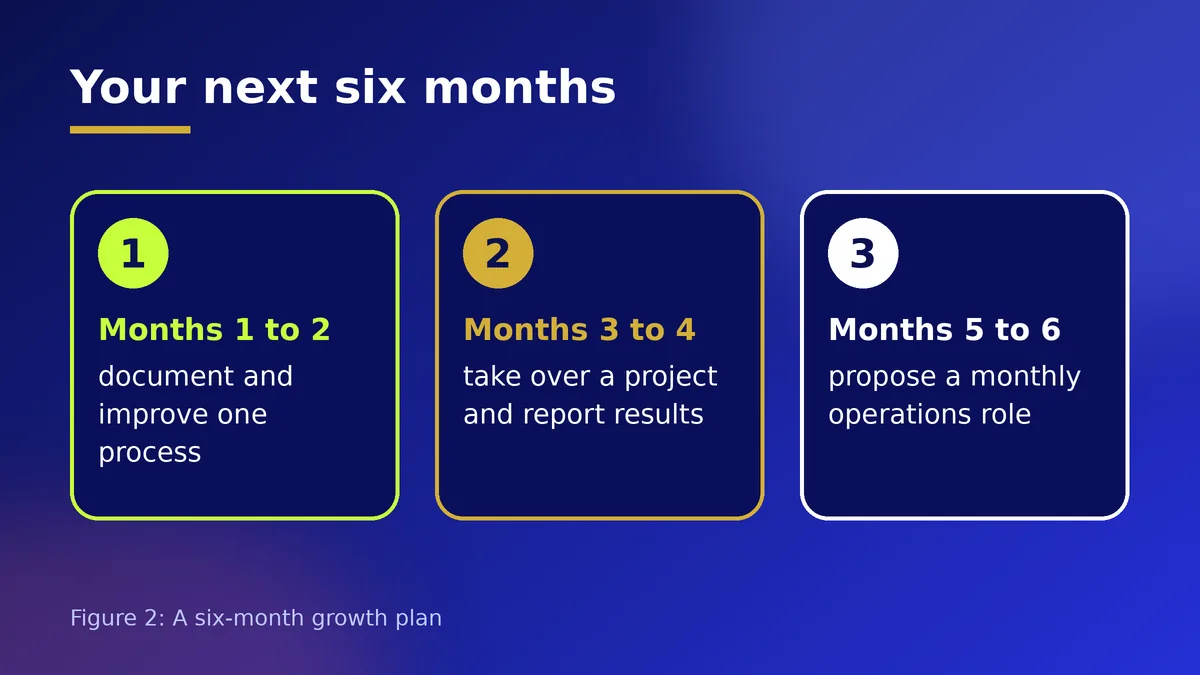
Pick one skill per month, practise it on real work and write down one result you achieved with it.
Show Your Value With Evidence
Keep a simple record of what you improved: hours saved, errors reduced, projects completed on time, sales or enquiries handled. A short monthly summary for your client or employer is powerful, and it gives you proof when you ask for more.
A portfolio page with two or three short case studies, each stating the problem, what you did and the result, can win better clients and better pay.
Moving to Higher Pay
When you have taken ownership of a process or project and can show results, propose a change: a monthly retainer or a defined role with clear responsibilities and a higher rate. Describe what the business gains, not what you want. If the current client cannot pay more, use your results to approach clients who can.
Always agree your role, duties, hours, tools and payment terms in writing, and keep boundaries so a higher-level role does not become unlimited work.
Mistakes to Avoid
Do not take on every task without limit. Do not hide your work: make progress visible. Do not accept access to sensitive accounts without clear written permission and secure password habits. And keep learning, because tools change quickly.
Action Checklist
- Document three repeating tasks as checklists
- Learn one project management tool well
- Automate one routine job
- Write a one-page monthly results summary
- Create a short portfolio with two case studies
- Agree role, hours and pay in writing
Frequently Asked Questions
Do I need a certificate to move up?
Certificates can help, but proof matters more. Show processes you documented, projects you delivered on time and results you improved.
How do I ask for higher pay without losing my client?
Bring evidence, describe the extra value you now provide and propose a defined role with a monthly rate. Be ready to explain what the business gains.
Which tool should I learn first?
Learn one project management tool and one spreadsheet or automation tool really well. Depth in a few tools beats shallow knowledge of many.